While it is fun to hop on the conspiracy theory bandwagon every now and then, I really can’t take it seriously. I like to research ideas before I honestly subscribe to them, so I looked into the faked lunar landing and the collapse of the World Trade Center towers.
It is almost too incredible that we landed on the moon 40 years ago. It is history which occurred before I was born yet seems more advanced than our current technology. The key, I think, are the effects of gravity and atmosphere on landing and taking off. The moon has 1/6 the gravitation pull as Earth and no atmosphere, so the challenges of ascent and descent are much simpler. I am not a rocket scientist, so it’s all black magic to me.
The collapse of the World Trade Centers looks too controlled and neat for non-engineered processes. It looks like a controlled, engineered demolition. But, of course, I am not a demolition expert or a real structural engineer, so I don’t really know. As an ignorant outsider, I just have to take the word of the structural engineering community and the peer reviewed reports they have published, such as http://www.civil.northwestern.edu/people/bazant/PDFs/Papers/466.pdf
So, for conspiracy theories, the problem is lack of information. I honestly don’t have enough information to either believe or disbelieve almost anything. We could have landed on the moon; it could have been an elaborate hoax. The Trade Center towers could have collapsed from heat softened buckling; they could have been demolished to make an excuse for renewed investment in the military.
Does God exist? I don’t know; I’m just a monkey’s uncle and you can’t teach a monkey calculus.
Tuesday, July 21, 2009


Thursday, July 16, 2009


Tuesday, July 14, 2009
Type Junky
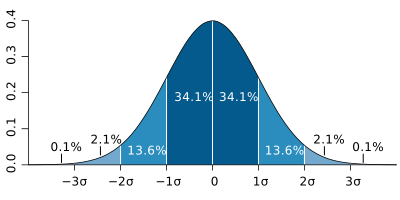
What is the appeal of personality tests and descriptions? I am guilty of being addicted to trying to find the perfect description of me. Is this vanity, narcissism, insecurity, a need for structure...? It feels so good to find a description that works. "Wow, this is dead on. That is so me. Its amazing how accurate this is!" I crave these moments of clarity like a drug addict. The MBTI is my drug - despite the fact that it is obsolete, inaccurate, useless, no longer in favor, etc. The fundamental premise of bimodal, one-extreme-or-the-other, type distribution is empirically incorrect. People are normally distributed over the dimensions. Most people (68%) are normal for extroversion, thinking-feeling, sensory-intuition, and perceiving-judging. Less than one sixth of the population are greater than one standard deviation from the average for any one of these dimensions, and less than (1/6)^4 are any pure type, eg ESTJ - 1/6 unusually E times 1/6 unusually S times 1/6 unusually T times 1/6 unusually J or 1/1296. So, can't find your type? This is probably why.
Despite this knowledge and irritation, I still find myself craving a description. What is wrong with me? I have taken Five Factor Model tests and self reported myself to be high on extroversion, agreeableness, openness, conscientiousness, and stability. Translated into MBTI, that would make me a ENFJ - which utterly fails to describe me accurately (I'm much closer to an INTP).
I think I want a benevolent dictation of how to live my life - what career to choose, what hobbies, what style of dress, etc - to optimize my satisfaction and contentment. I am a machine in need of a tune up - just give me the right repair manual and I'll be humming as good as new.
Greg Robin, to be happy, be physically and socially active and think well of yourself. The end.
Thursday, July 9, 2009
Plan

Architects rely too much on plan views and aerial perspectives. Not too many people fly over buildings or gardens.
It irritates me to look through Francis Ching's book on architecture form, space and order and see examples of interesting plan views. Plan views are good for traffic flow and basic functionality, but it almost completely irrelevant for beauty.
It also irritates me that we are designing a unique roof structure (for a government building in Toledo, Ohio) that will be completely invisible to any of the occupants.
Wednesday, July 8, 2009
3 of 4
"The percentage of the children born in London who died before the age of five decreased from 74.5% in 1730-1749 to 31.8% in 1810-1829."
^ Mabel C. Buer, Health, Wealth and Population in the Early Days of the Industrial Revolution, London: George Routledge & Sons, 1926, page 30 ISBN 0-415-38218-1
Wow. 3 out of 4 kids died before the age of five. How could you live without a completely irrational sense of hope and optimism?
^ Mabel C. Buer, Health, Wealth and Population in the Early Days of the Industrial Revolution, London: George Routledge & Sons, 1926, page 30 ISBN 0-415-38218-1
Wow. 3 out of 4 kids died before the age of five. How could you live without a completely irrational sense of hope and optimism?
Worldometers


I asked some people at work if they knew what the world population was and I was surprised how completely uninterested and far-off they were... then, a couple of weeks later, my boss asked me if I knew who painted a picture he showed me - I had no clue. Nora knew immediately that it was Emily Carr, but she couldn't care less about the world population.
For those who are interested in world metrics, check this out: http://www.worldometers.info/
Tuesday, July 7, 2009
Waste of money or economic stimulus?
Rambling and disorganized... thinking.
I am not really talking about the stimulus package here - I am more curious about the benefits of spending exorbitant amounts on architecture, new medical procedures, luxury goods, etc. While my initial reaction to people spending insane amounts on basically useless things is negative and exasperated, I think it might actually be a good thing or a neutral thing. Money spent is money earned by someone else. The faster money is spent, or the more it is spent in a given period of time, the more it is used, right? A dollar spent 10 times in a year is more useful than a dollar spent once.
Foolish spending, however, does not promote efficient industries.
Inefficiency leads to costing more for the same thing - which is basically inflation, no?
If you invest in a foolish project, you are not going to get your money back plus interest, you are going to lose money.
So all spending is not equal.
Architecture is not necessarily foolish - it can promote business, tourism, etc. But I am suspicion when government money is spent on extravagant airports that are going to be used regardless.
Subscribe to:
Posts (Atom)
-
For the one hundredth time, Jacob asked himself why he was nervous. There was absolutely nothing special about asking the Net a question; bi...
-
 Continuing with my dismal theme, one problem with negative growth is that people lose jobs and lose the freedom of changing jobs or of movin...
-
Shrink: It's 5 o'clock in the morning, Wrap. Can this wait for a few hours? Wrap: I'm sorry, doc, I falling apart here. I r...
